UCLA HAcK Accelerator · 2024

Mars Rover

I led the CAD design and fabrication of the chassis and mechanical arms for a first-place rover built in a three-day engineering challenge.

1st placeMechanical designRapid prototyping
Completed blue-and-yellow student-built Mars rover with a raised wooden mechanical arm
Completed rover at the 2024 UCLA HAcK Accelerator. Photo from the project team.

The engineering problem

Fit a capable rover into a small, rugged package.

The brief called for a rover that could move through a maze-like course, turn in place, collect and release payloads at different heights, climb a grade, and survive uneven terrain. Those tasks made the chassis and arm more than a frame: they had to package motors, sensors, power, and a working pickup mechanism within strict physical limits.

My contribution

I led CAD design and fabrication for the rover chassis and mechanical arms. I translated the challenge requirements into a buildable layout, made room for the drive and electronic components, and worked with the team to integrate the arm with the finished rover.
Design constraints

What the challenge demanded.

10 × 12 inMaximum chassis width × length
Up to 5 ozIndividual payload weight limit
Floor–8 inApproximate range of pickup heights
10% + 6 inGrade to climb + drop-test height

These are the published competition requirements, not claims that every limit was independently measured on our final rover. Read UCLA's full challenge brief ↗

Mechanical design story

From packaging to an integrated rover.

The design evolved around a practical question: how do the structure, drive system, and payload arm work together without crowding a chassis limited to 10 by 12 inches?

01

Start with the chassis.

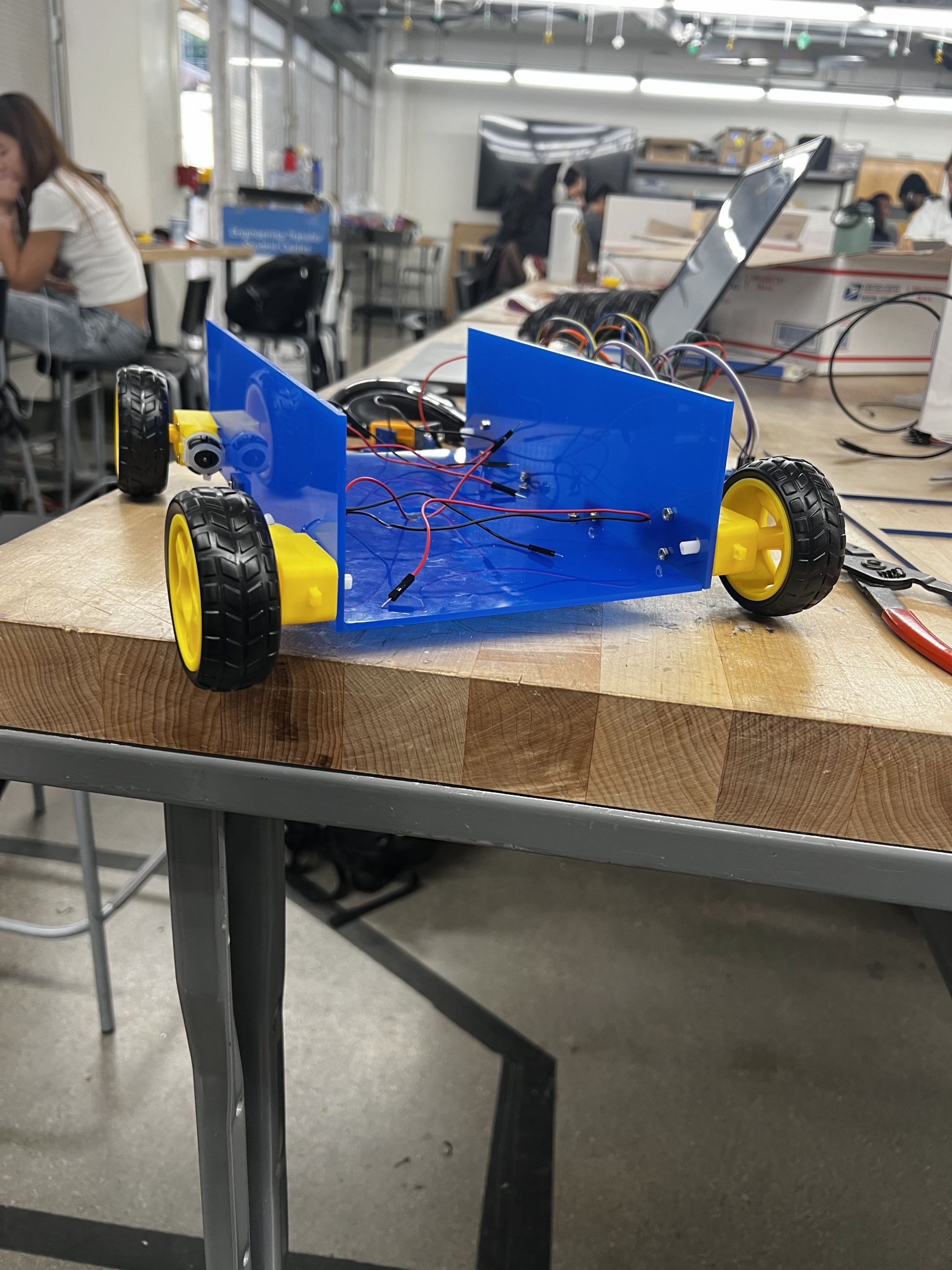
I used CAD to plan the chassis and component locations before fabrication. This first iteration shows the open platform, wheel placement, motor mounts, and space reserved for wiring and future systems.

The open layout let us check the mechanical package before enclosing components or adding the payload arm.

First rover iteration: open blue chassis with four wheels, motors, and loose wiring on a workbench
First rover iteration · open chassis and drive layout. Photo from the project team.
02

Add structure and mounting points.

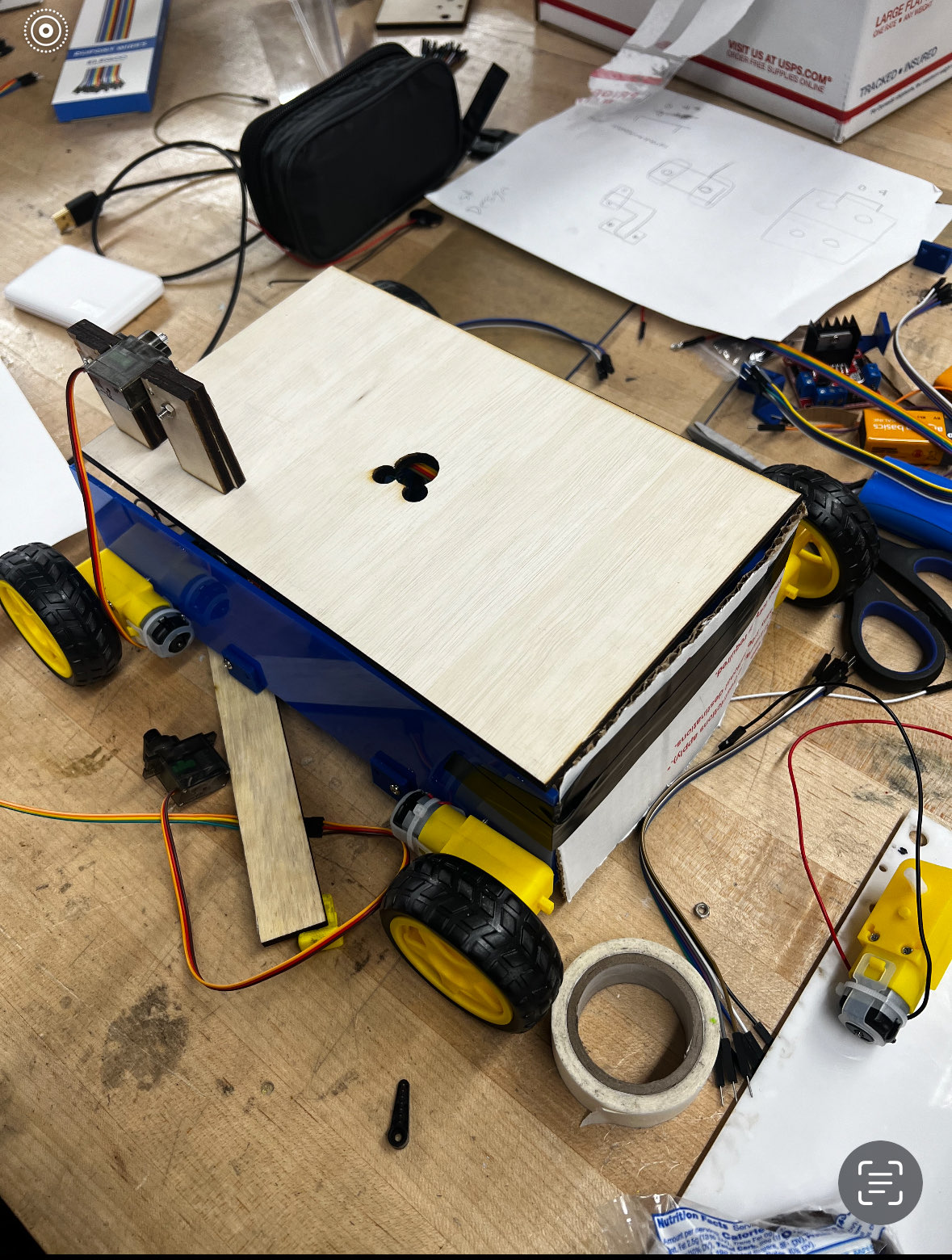
The next build stage added a deck and attachment points to the rolling chassis. That gave the team a more complete structure to work around while positioning motors, electronics, and the payload mechanism.

Rover chassis with a wooden top deck, wheels, motors, and mounting hardware during assembly
Later chassis build with deck and mounting hardware. Photo from the project team.
03

Build across disciplines.

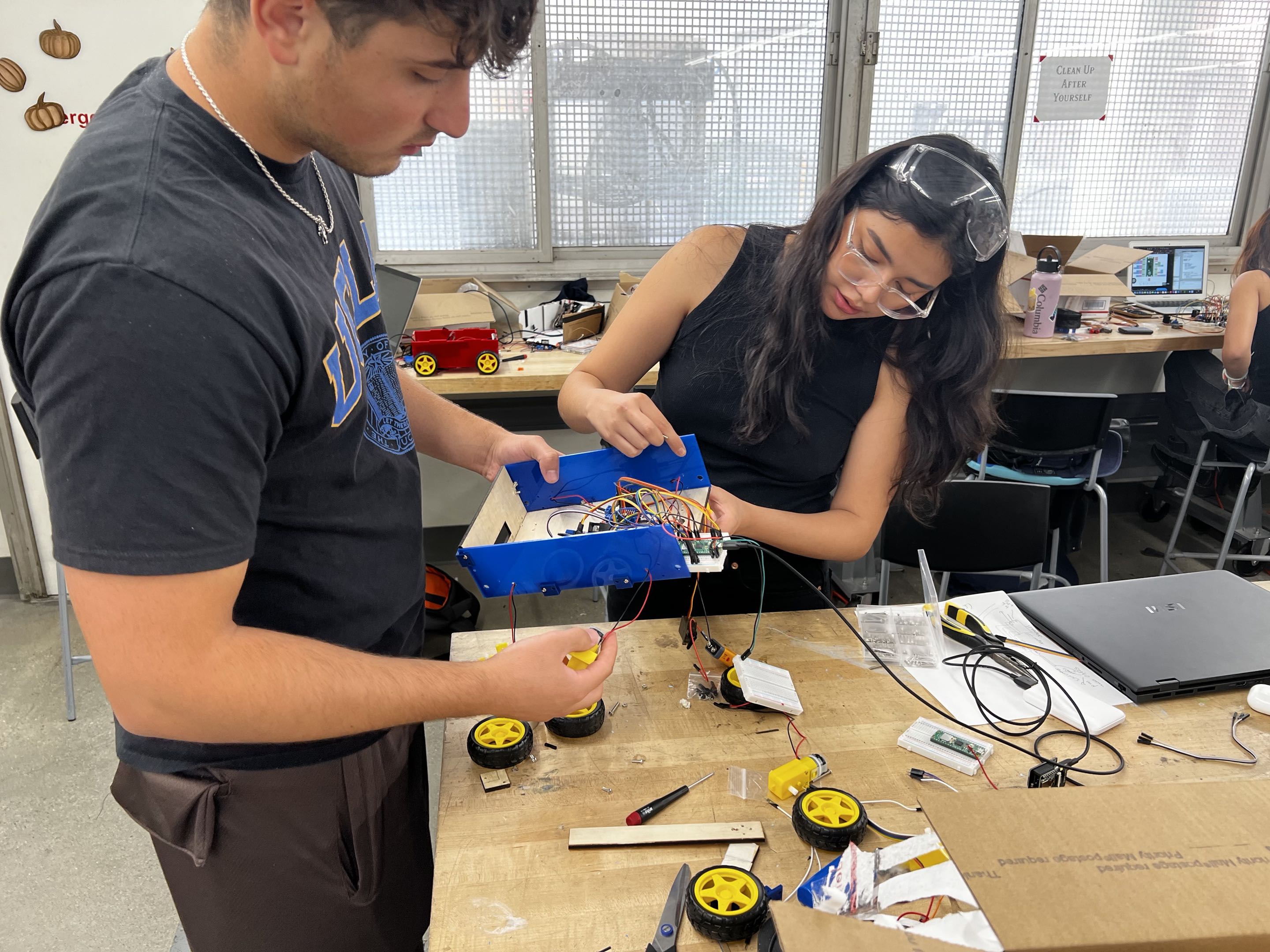
After the chassis and arm parts were fabricated, I worked with teammates to fit the mechanical components around motors, wiring, sensors, and controls. The open chassis made the integration work visible—and kept parts accessible while the rover was still changing.

Student team members holding the rover chassis while working on motors and wiring at a workbench
Chassis and electronics integration during the build. Photo from the project team.
04

Complete the system.

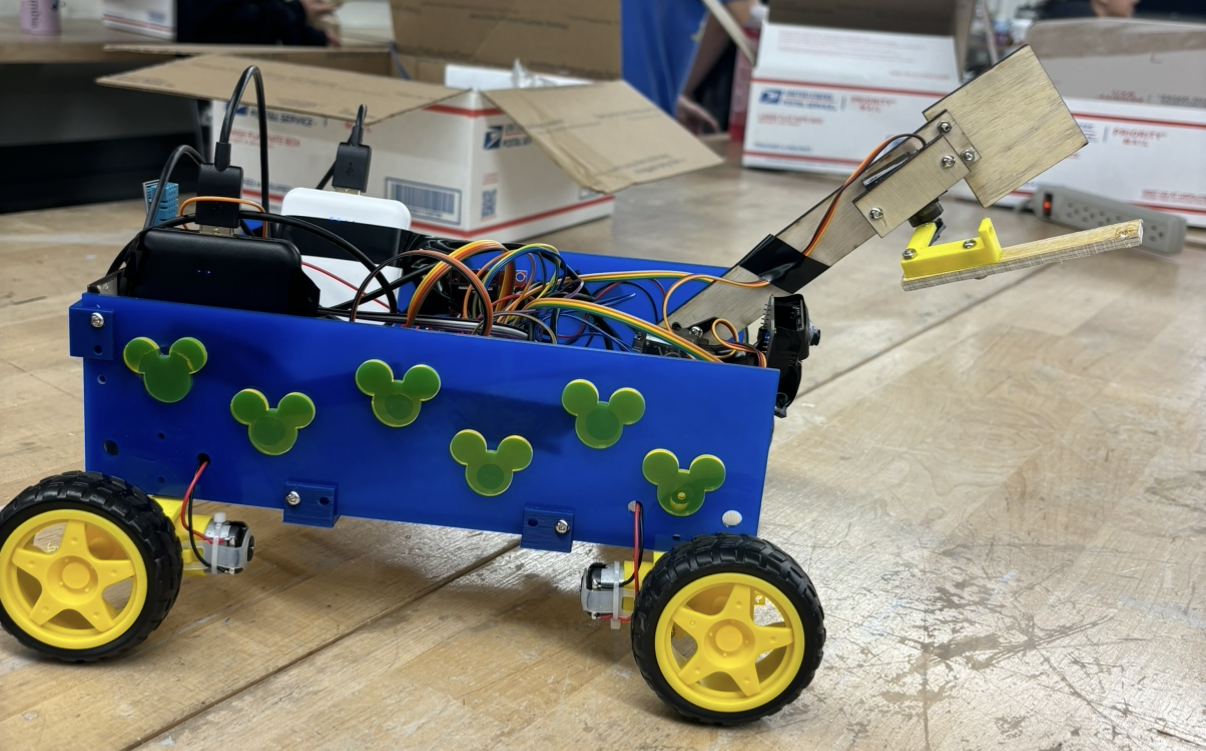
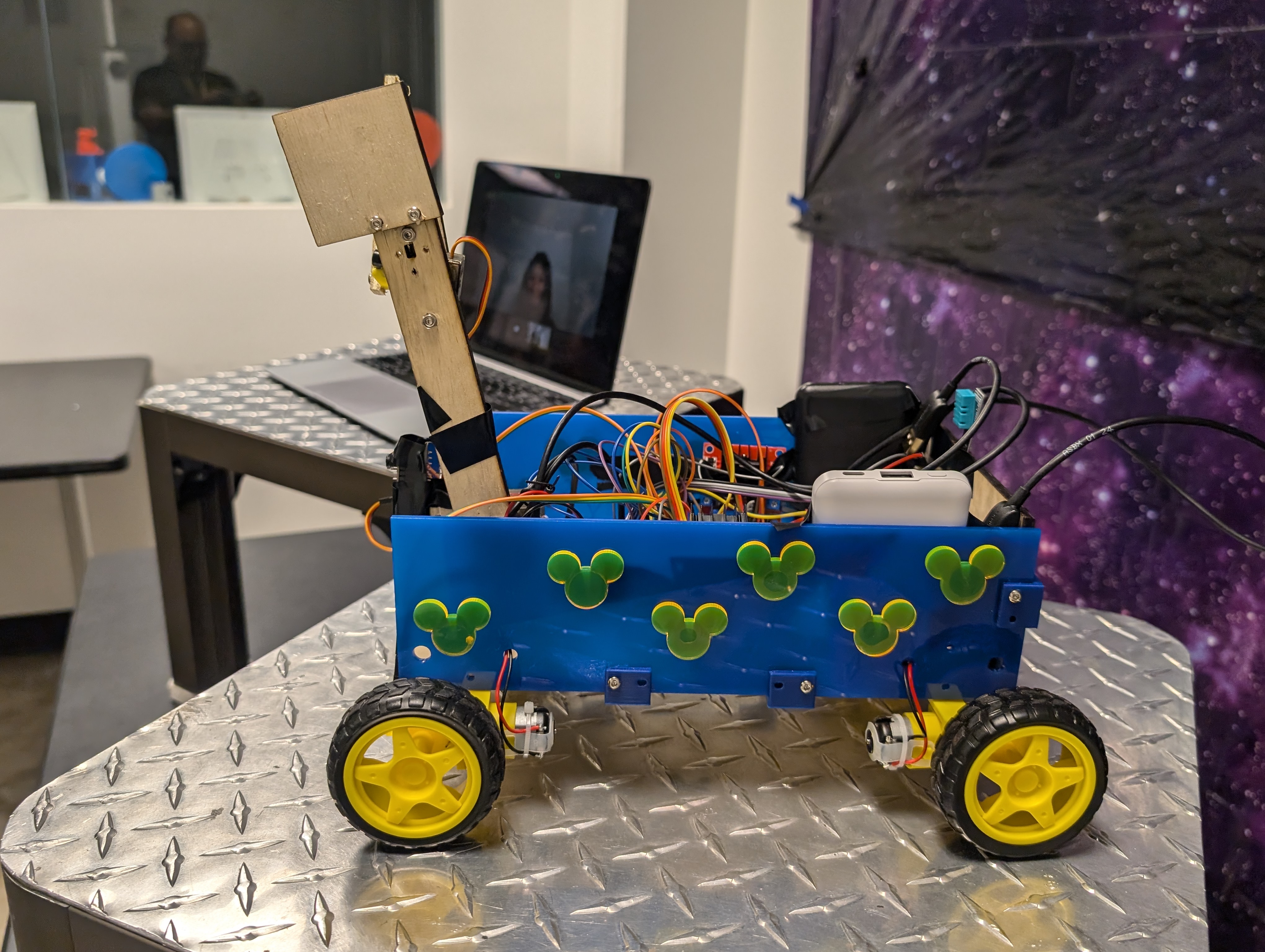
The final rover brought the drive platform and raised mechanical arm into one prototype for the field-of-play challenge. The arm gave the team a way to approach payload handling while the chassis carried the components needed to move and operate the rover.

Completed rover on a workbench showing blue chassis, yellow wheels, exposed electronics, and raised wooden arm
Final assembled rover, showing the chassis and raised arm. Photo from the project team.

Result & takeaway

First place, with a working team prototype.

Our team earned first place at the 2024 UCLA HAcK Accelerator. For me, the strongest engineering lesson was making a mechanical design that could be fabricated, assembled, and integrated quickly with systems being developed at the same time.

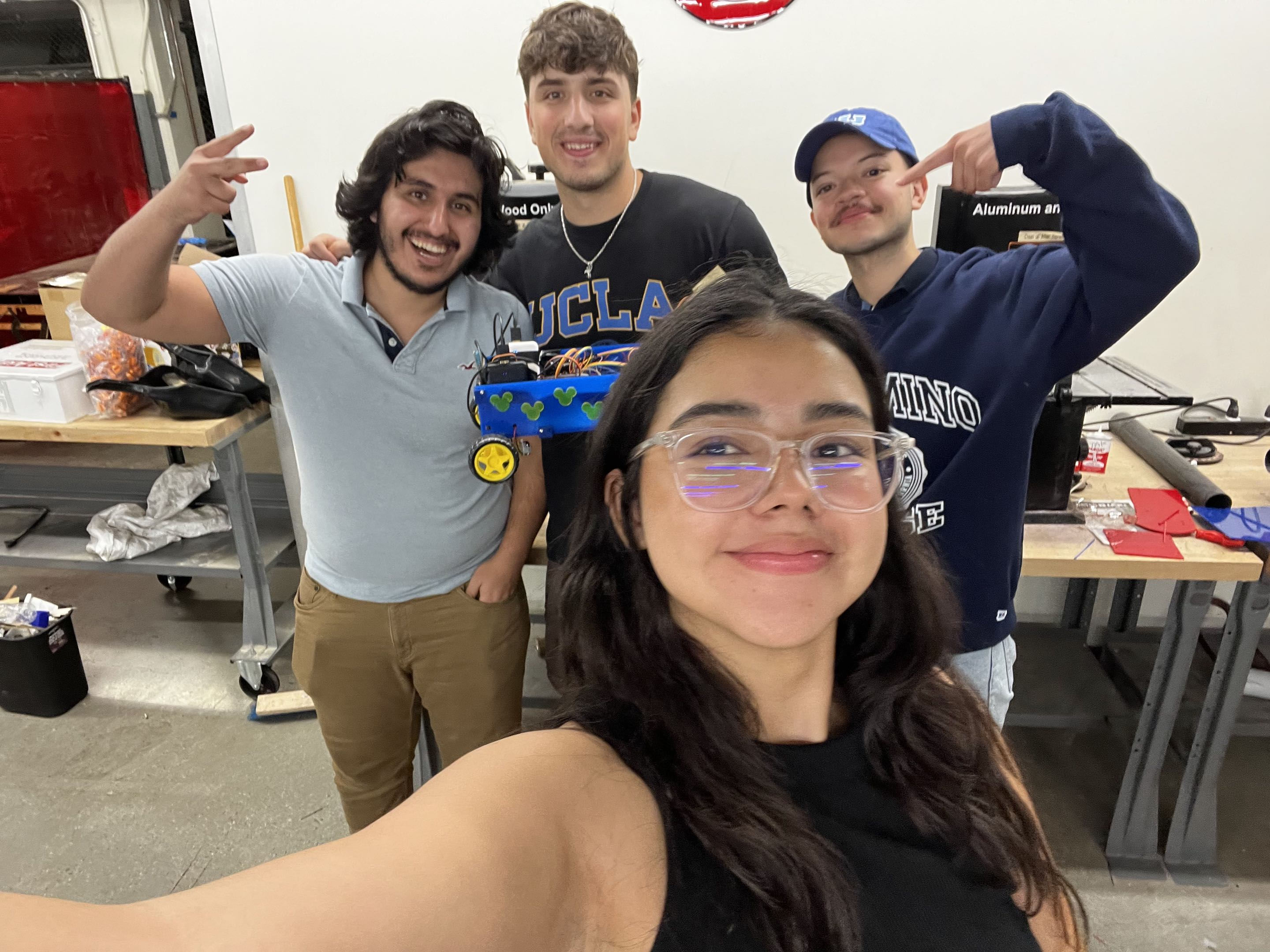
Rover project team and mentor posing together with the completed rover in the workshop
Our team and mentor with the completed rover. Photo from the project team.

The people behind it

A team build, from first iteration to final rover.

Mechanical design was one part of a larger team effort. Working alongside teammates and our mentor helped turn the early chassis into a complete rover ready for the challenge.

Prototype evidence

See the rover and control system.

Rover footage from the competition.
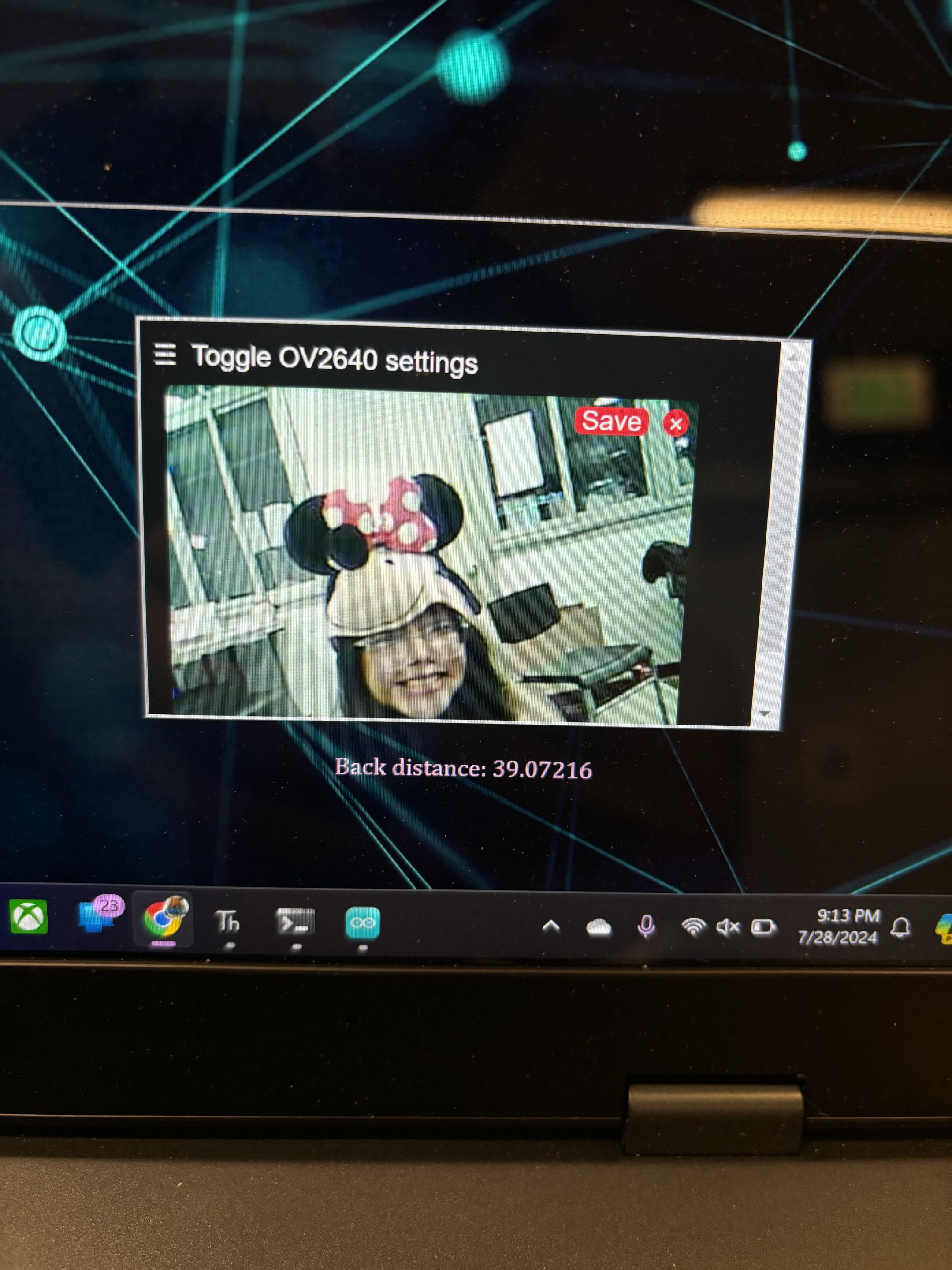
Laptop displaying the rover's camera feed and rear-distance readout
Camera feed and rear-distance readout from the team control interface.

Project context and published specifications: UCLA Engineering Transfer Center's 2024 HAcK brief ↗. The challenge brief also documents Northrop Grumman engineers' participation in design pitches and judging.

← Back to selected projects